Child Therapist Melbourne FL: Compassionate Counseling for Kids & Teens
Finding the right support for your child can feel overwhelming, especially when you’re navigating emotional or behavioral challenges for the first time. This guide helps parents in Melbourne, FL quickly understand child therapy options and take meaningful steps toward getting their kids the help they need.
For families seeking expert care, Bella Psychological Services offers a team of dedicated specialists experienced in child and adolescent therapy. Visit bellapsychologicalservices.com to explore our specialists’ profiles and learn more about the personalized, compassionate care available to support your child’s mental health journey.
Quick Answers: How to Find a Child Therapist in Melbourne, FL
If you’re ready to take action today, here’s what you can do right now to connect your child with mental health care in the Melbourne area:
Call a local child therapist’s office during typical business hours (Monday–Friday, 9 AM–5 PM) to ask about availability and schedule an initial consultation
Check your insurance coverage by calling the member services number on your card and asking about in-network child therapists, co-pays, and telehealth benefits
Schedule a consultation with 1–2 therapists to find the best fit for your family—many practices offer free 15-minute phone consults
Prepare questions such as “What experience do you have with my child’s specific concerns?” and “How do you involve parents in treatment?”
Melbourne, FL families often seek help with anxiety, ADHD, school issues, and behavior problems. Evidence-based therapies like CBT and play therapy are commonly available from local providers who specialize in working with children and adolescents.
Early support in childhood can prevent bigger struggles later in life. Accessible, compassionate care is available right here in Melbourne and the greater Brevard County area—you don’t have to wait until things get worse.
Child Therapy in Melbourne, FL: What It Is and Who It Helps
Child therapy is a specialized form of mental health care designed to help children and teens process emotions, develop coping skills, and work through challenges in age-appropriate ways. Unlike adult therapy, which relies heavily on verbal conversation, child therapy often incorporates play, art, and creative expression to help young clients communicate feelings they may not yet have words for.
In Melbourne, FL, child therapists include several types of licensed professionals who have completed training specific to working with young people. These providers create safe, supportive environments where children can explore difficult experiences and build resilience.
Types of licensed providers you’ll find locally:
Licensed Mental Health Counselors (LMHC)
Licensed Clinical Social Worker professionals
Student interns finishing their graduate studies
Other licensed providers with child and adolescent specializations
Common age ranges served in Melbourne practices:
Early childhood: ages 3–5
School-age children: ages 6–12
Teens: ages 13–17
Young adults: some practices extend services to around age 24
Typical reasons Melbourne families seek child therapy:
Anxiety, including social anxiety, separation anxiety, and school-related worries
Depression and mood changes
ADHD and behavioral issues
School refusal or academic struggles
Social difficulties and relationship issues
Family changes such as divorce or adoption
Trauma, grief, or processing difficult experiences
Services can be delivered in-person at Melbourne offices—such as those near N. Wickham Road, Guava Avenue, or central Melbourne—or through secure telehealth platforms for families across Brevard County.
Types of Child Therapy Commonly Available in Melbourne, FL
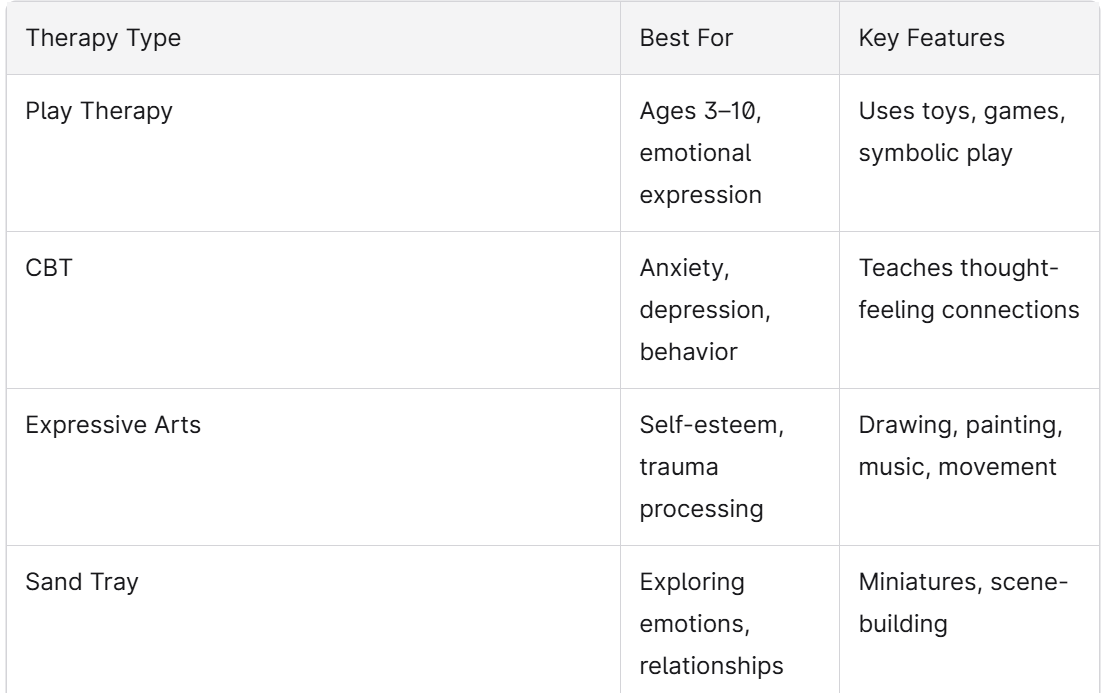
Melbourne, FL offers a range of evidence-based and creative therapies designed to meet the unique needs of kids and teens at various developmental stages.
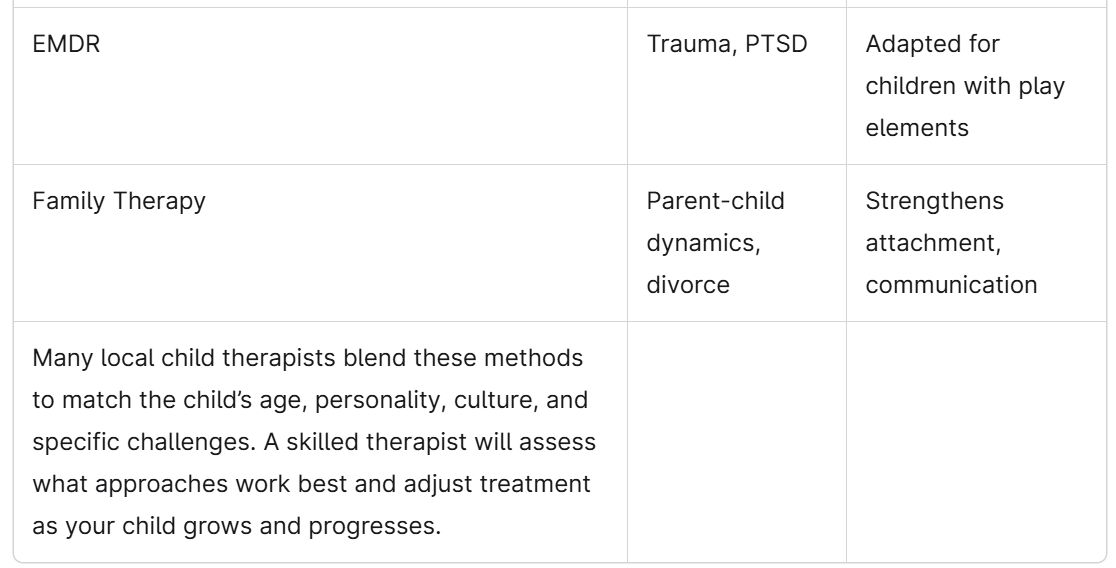
Main therapy modalities available locally:
Many local child therapists blend these methods to match the child’s age, personality, culture, and specific challenges. A skilled therapist will assess what approaches work best and adjust treatment as your child grows and progresses.
Parents are often involved in the treatment plan, especially for younger children under about age 12. This involvement might include regular updates, brief check-ins, or structured parent coaching sessions.
All therapies should be delivered by licensed or supervised clinicians following Florida regulations, with a strong emphasis on safety and confidentiality.
Play Therapy in Melbourne, FL
Play therapy is widely used in Melbourne for children roughly ages 3–10 who may not have the words to fully express their feelings. Because play is a child’s natural language, it provides a powerful way to process emotions, work through stress, and develop new coping skills.
What a typical play therapy room looks like:
Age-appropriate toys including dolls, action figures, and puppets
Art supplies such as crayons, paint, and clay
Games that encourage social skills and emotional expression
Sand trays with miniature figures for scene-building
Puppets and storytelling materials
A child in Melbourne might attend weekly 45–50 minute sessions, building a trusting relationship with their therapist over time.
How play therapy helps children:
Reduces anxiety by providing a safe space to explore fears
Improves emotional regulation through guided play experiences
Addresses behavior issues by teaching self-control in a low-pressure setting
Builds social skills through interactive games and role-play
Helps children adjust to changes like moving, divorce, or starting a new school
Play therapy can be non-directive (child-led, where the therapist follows the child’s lead) or directive (therapist-guided activities targeting specific goals). Research shows play therapy has approximately 75% efficacy for internalizing disorders like anxiety and depression in children.
Parents usually receive regular updates and may have brief check-ins before or after sessions to support progress at home. This collaboration helps create consistency between what happens in therapy and your child’s daily life.
Cognitive Behavioral Therapy (CBT) for Kids and Teens
CBT is one of the most research-supported therapies offered by Melbourne child therapists, particularly effective for anxiety, depression, and behavior problems. Studies show effect sizes up to 0.8 in meta-analyses—meaning CBT produces substantial, measurable improvements for many children.
How CBT works for children and adolescents:
Teaches kids to notice unhelpful or distorted thoughts
Helps them understand the connection between thoughts, feelings, and actions
Provides concrete techniques for managing stress and difficult emotions
Builds problem-solving skills they can use independently
Kid-friendly CBT tools and techniques:
Worry scales to rate anxiety levels from 1–10
Thought journals to identify and reframe negative thinking
Feelings charts to build emotional vocabulary
Exposure steps for fears (gradually facing school anxiety, test anxiety, or separation worries)
Behavioral experiments to test assumptions
Sessions typically last 45–60 minutes and occur weekly for several months. Homework and practice between sessions are normal parts of CBT—this is where children apply new skills in real-life situations.
For younger children, therapists often combine CBT with play or art to make the skills age-appropriate. A trained therapist knows how to adapt these techniques so they feel engaging rather than overwhelming.
Expressive Arts, Sand Tray, and Trauma-Focused Therapies
Many Melbourne, FL child therapists integrate creative therapies when kids struggle to talk directly about hard experiences. These approaches tap into creativity and imagination to help children process what words alone cannot capture.
Expressive arts therapy:
Uses drawing, painting, music, and movement as tools for self-expression
Helps children build self esteem and process big emotions
Particularly effective for children who feel overwhelmed by direct conversation
Creates tangible representations of internal experiences
Sand tray therapy:
Involves sand, water, and miniature figures to create scenes
Allows children to explore themes of safety, control, loss, and relationships
Reveals subconscious narratives through symbolic play
Gives children a sense of agency over their inner world
Trauma-focused approaches (including EMDR):
EMDR adapted for children combines bilateral stimulation with play or art
Helps process memories of accidents, abuse, bullying, or other distressing events
Research indicates approximately 80% of traumatized children report symptom relief after 8 sessions
Addresses PTSD and other trauma-related symptoms
These methods are used in Melbourne-area practices for children who have experienced events like hurricanes, serious illness, parental separation, or community violence. Treatment is paced carefully with strong emphasis on emotional safety, coping skills, and caregiver involvement.
Child–Parent & Family-Focused Counseling
Involving parents or caregivers is a key part of effective child therapy in Melbourne, especially for younger children. When families work together in treatment, children often show faster and more lasting improvements.
Child-Parent Relationship Therapy (CPRT) and similar approaches:
Strengthen attachment between parent and child
Improve communication patterns within the family
Reduce conflict and provide support for everyone involved
Train parents to conduct structured play sessions at home under therapist guidance
What joint parent–child sessions might look like:
Structured play activities done together
Coaching parents on reflective listening techniques
Practicing new ways to respond to big feelings and behavioral challenges
Role-playing difficult situations in a safe environment
Family situations commonly addressed in Melbourne practices:
Co-parenting after divorce and navigating custody arrangements
Blended family dynamics and adjustment
Sibling rivalry (such as a toddler struggling with a new baby)
Court-related family issues requiring therapeutic involvement
Managing stress related to work schedules or relocation
Some sessions may be parent-only to discuss parenting strategies, behavior plans, and ways to support school success. This creates a team approach where therapist and parents work together toward the child’s well being.
Common Concerns Treated by Child Therapists in Melbourne, FL
Melbourne child therapists provide support for a wide range of emotional, behavioral, and developmental concerns. Local data suggests approximately 1 in 5 children in Brevard County face mental health challenges, with anxiety affecting about 9.4% of Florida youth and ADHD affecting roughly 10.5%.
Mental health conditions commonly treated:
Anxiety disorders (social anxiety, separation anxiety, school anxiety)
Depression and mood changes
ADHD and impulse control difficulties
Autism-related social and emotional challenges
Behavioral outbursts or oppositional behavior
OCD and related conditions
Life events relevant to local families:
Divorce or custody changes requiring adjustment
Relocation due to employment at nearby aerospace or tech employers
Grief after the death of a loved one or pet
Stress related to academic pressure or bullying
Adjustment to adoption or foster care placement
Processing physical illness or medical procedures
Therapists often collaborate with pediatricians, psychiatrists, and schools in Brevard County to coordinate care (with parent consent). This integrated approach helps identify the full picture and create comprehensive treatment plans.
What to Expect at Your Child’s First Therapy Appointment
It’s completely normal for both parents and children to feel nervous about a first therapy visit in Melbourne, FL. Knowing what to expect can help everyone feel more prepared and at ease.
What typically happens during the intake session:
Reviewing forms, consent documents, and confidentiality policies
Discussing your child’s history, current challenges, and family background
Clarifying goals for treatment and what you hope to accomplish
Explaining confidentiality limits under Florida law (such as mandatory reporting)
How the session is usually structured:
The therapist may meet with parents and child together first
Depending on age, the therapist will have some one-on-one time with the child
The office environment is designed to feel welcoming and child-friendly
Sessions typically last 45–60 minutes for the intake
What to bring:
Insurance card and identification
List of current medications
School reports, IEP, or 504 plans if relevant
Previous evaluation results or records from other providers
Written notes about your main concerns and questions
By the end of the first or second session, families usually receive an initial treatment plan outlining goals, recommended frequency of sessions, and what to expect going forward. Most Melbourne practices offer both daytime and after-school appointments, and some provide telehealth options if your child is sick or transportation is difficult.
In-Person vs. Online Child Therapy in Melbourne
Families in Melbourne and across Brevard County can often choose between in-office and secure online sessions, depending on the child’s age and needs. Both formats have distinct advantages.
Advantages of in-person sessions (especially for younger children):
Access to playrooms, sand trays, art supplies, and sensory materials
Easier rapport-building through physical presence
Better suited for active, play-based interventions
More structure for children who need routine
Advantages of telehealth (especially for teens):
Convenience after school without transportation time
Reduced travel on busy roads like N. Wickham Road or US-1
Ability to attend from home during packed extracurricular schedules
Greater sense of privacy and comfort in familiar surroundings
Hybrid models:
Some children start in person and switch to online when needed
Useful during illness, travel, or inclement weather
Allows flexibility as schedules change
Any online therapy must use HIPAA-compliant platforms and follow Florida licensing rules. Your therapist can explain how they protect confidentiality and what technology you’ll need.
How to Choose the Right Child Therapist in Melbourne, FL
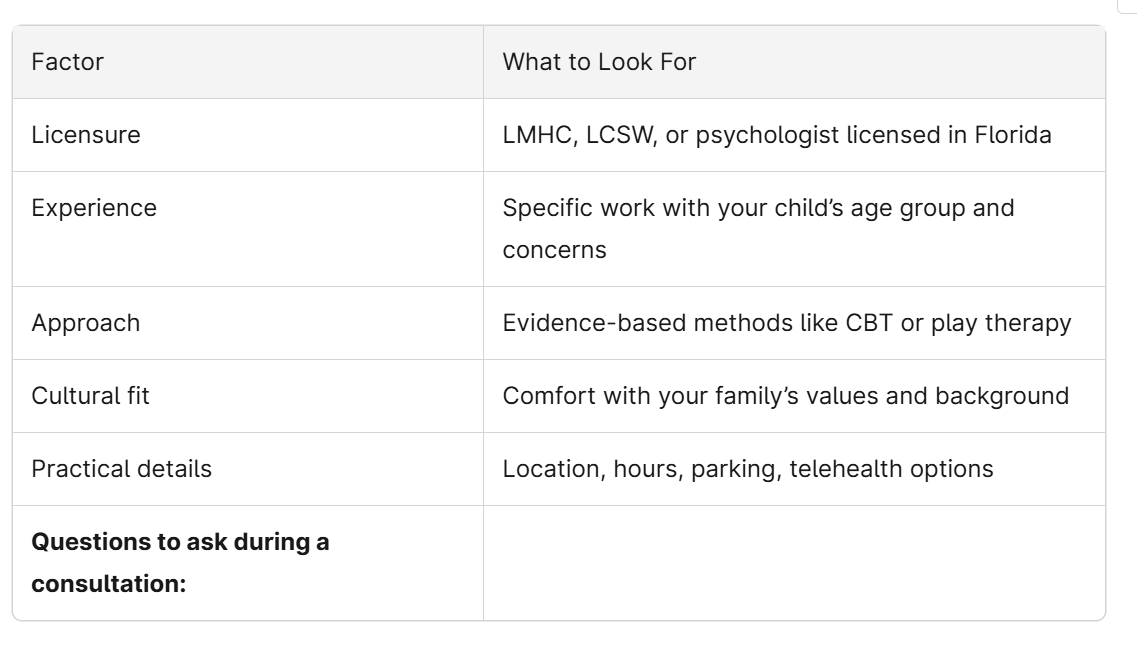
Finding the right fit is essential for successful therapy. It’s okay to ask questions and explore multiple options to find a therapist who connects well with your child and family.
Key factors to consider:
Questions to ask during a consultation:
“What experience do you have with children experiencing anxiety or ADHD?”
“How do you involve parents in treatment?”
“What does a typical session look like for a child my son/daughter’s age?”
“How will I know if therapy is working?”
Practical considerations:
Office location in Melbourne or nearby suburbs
Parking convenience and accessibility
Availability of before/after school appointments
Schedule flexibility for busy families
Pay attention to how your child responds after the first 2–3 sessions. If something doesn’t feel right, discuss any concerns about fit directly with the therapist—good clinicians welcome this feedback and strive to make adjustments.
Costs, Insurance, and Accessing Child Therapy Locally
Cost is a major factor for many Melbourne families seeking child therapy. Understanding your options helps you access services without unnecessary financial stress.
What to know about paying for therapy:
Session costs typically range from $100–$200 for private-pay without insurance
Approximately 80% of local practices accept major insurance plans
Many providers accept Medicaid plans available in Florida
Some practices offer sliding scale fees based on income
Steps to navigate insurance coverage:
Call your insurance company to ask about in-network child therapists in Melbourne
Ask about co-pays, deductibles, and session limits
Confirm whether telehealth sessions are covered
Request that the therapist’s office verify benefits before your first appointment
Additional resources:
Community clinics and non-profits in the Space Coast area may offer lower-cost services
Some faith-based counseling centers provide grant-funded or reduced-fee options
Ask about payment plans if cost is a barrier
Consider using flexible spending accounts (FSA) or health savings accounts (HSA) for qualified expenses
Don’t let cost concerns prevent you from reaching out—many therapists are willing to discuss options and help families access personalized care.
Supporting Your Child Between Therapy Sessions
What parents do at home in Melbourne, FL can greatly enhance progress from therapy. Consistency between sessions and daily life helps children integrate new skills faster.
Strategies to support your child:
Keep routines predictable, especially around sleep, meals, and homework
Use calming tools suggested by the therapist (deep breathing, sensory items)
Practice coping skills together—make it a family activity
Model healthy emotion expression by naming your own feelings
Communication tips:
Maintain open, age-appropriate conversations about therapy
Frame therapy as a place for support and growth, not punishment
Ask open-ended questions like “What was something interesting you did today?”
Avoid pressing for details if your child isn’t ready to share
Collaboration with schools:
Work with teachers and school counselors in Brevard County to reinforce skills
Share relevant strategies for emotional regulation and social problem-solving
Communicate about any accommodations or supports your child needs
What to watch for:
Changes in sleep patterns, appetite, or energy levels
Shifts in school performance or social engagement
Positive thinking and increased hope about the future
Share observations with your child’s therapist during sessions
Getting Started with a Child Therapist in Melbourne, FL
Taking the first step toward child therapy can feel uncertain, but hope is closer than you think. Melbourne and the surrounding Brevard County area offer excellent resources for families seeking support, and you don’t have to navigate this alone.
Basic steps to get started:
Identify your main concerns and what you want therapy to address
Check your insurance coverage or determine your budget for private-pay
Research local child therapists who specialize in your child’s age and issues
Schedule a consultation to explore whether the therapist is a good fit
Prepare your child for the first visit with simple, reassuring explanations
High-quality child therapy is available in Melbourne both in person and online, addressing everything from everyday stress to significant trauma. Therapists here are trained to create safe, supportive environments where children can heal and grow.
Don’t wait until a crisis to seek help—early intervention often leads to better outcomes for children and adolescents. The ability to manage emotions, communicate effectively, and thrive through challenges can be developed at any age.
Your child’s resilience, growth, and future well being start with one conversation. Reach out to a local child therapist today and take that first step toward a more peaceful home and a happier child.